Reporting note: this article draws on Sky Sports; TaxiSports provides the summary and editorial framing.
FIA Court of Appeal Overturns Monaco Pit-Lane Ruling
The regulatory arithmetic of the Monaco Grand Prix has been redrawn in Paris. Following an appeal lodged jointly by McLaren and Red Bull, the FIA’s International Court of Appeal has reinstated two separate five-second pit-lane speeding penalties originally issued to Alpine driver Pierre Gasly. The ruling drops Gasly from third to seventh in the official classification, elevating Red Bull’s Isack Hadjar to the podium in third and moving McLaren’s Oscar Piastri up to fourth.
Gasly had initially crossed the line third in Monaco before the ten-second cumulative penalty demoted him. Five days later, Alpine successfully petitioned the stewards under a Right of Review, submitting telemetry and timing data that identified an incorrect pit-lane distance calculation. That decision cleared Gasly and restored his podium. However, the ICA panel ruled that the stewards' intervention undermined the procedural baseline of the race.
The pit-lane entry line at Monaco represents a zero-tolerance geometric boundary where millisecond discrepancies alter classified finishing deltas.
Briatore Levels Conflict-of-Interest Allegations
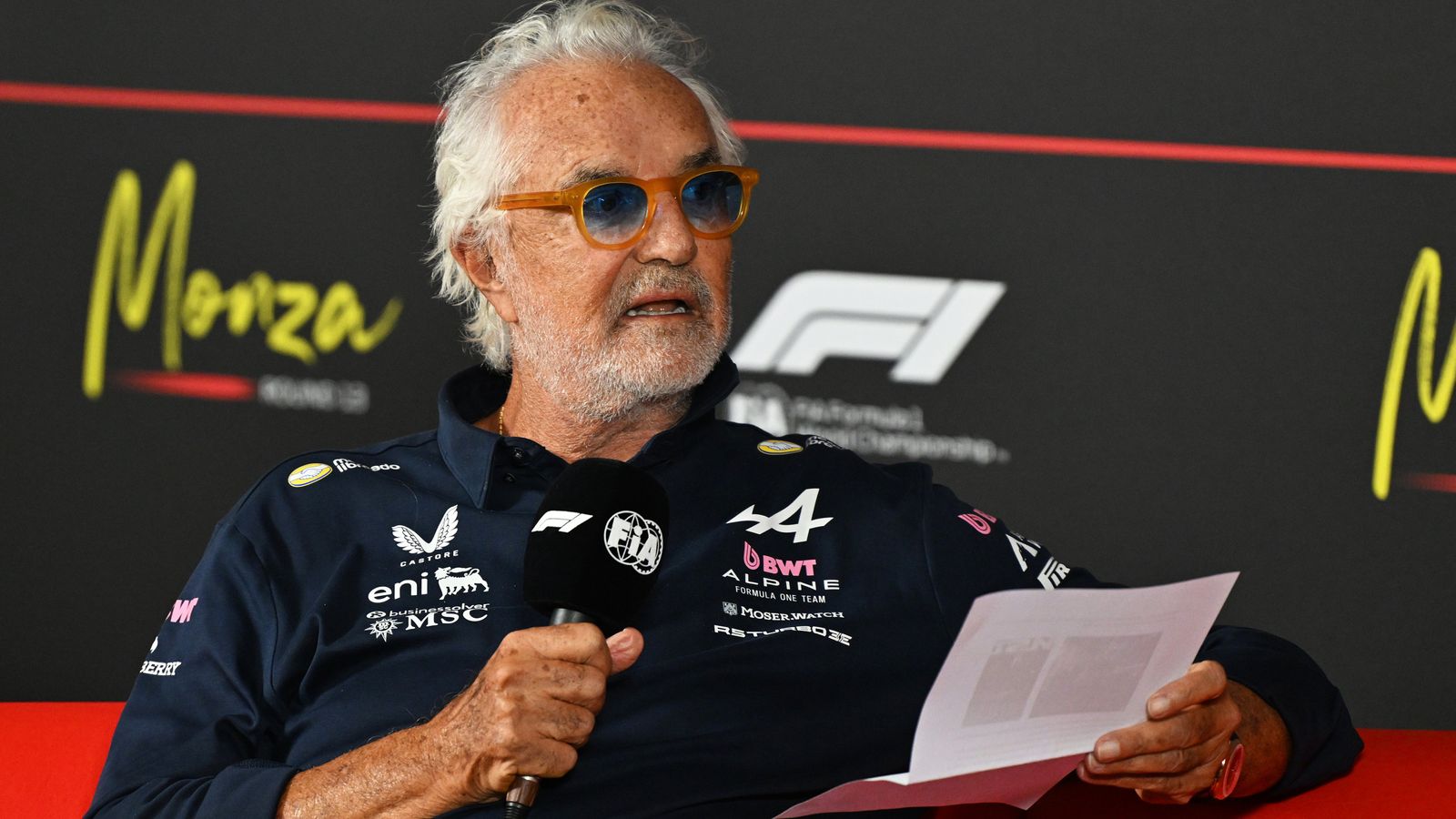
The Paris verdict triggered a sharp confrontation during Friday’s press conference at the Italian Grand Prix between Alpine executive director Flavio Briatore and McLaren team principal Andrea Stella. While Alpine issued a formal statement acknowledging the panel’s judgment, Briatore publicly challenged the impartiality of the tribunal.
Briatore alleged that one of the four sitting judges held a historical connection to McLaren, referencing the individual’s appearance at a 2018 charity event in California where McLaren road cars were featured. Briatore claimed the judge operated with an adversarial posture during proceedings and confirmed Alpine is evaluating external legal recourse.
“I think it’s very unfair, firstly, but we accept the decision,” Briatore stated. “The problem is, he is very linked with the McLaren company... I think it was quite unfair that one of the judges was linked with a team protesting us.”
Stella Responds: Integrity and Regulatory Precedent
Stella firmly rejected the claims, warning that public accusations against McLaren's operational integrity carried reputational consequences.
“I find that this conference is going in this direction quite insulting for McLaren, for the reputation of a team that deserves a lot of respect,” Stella said. “If anybody makes this kind of allegations, which seem quite serious, they are going to have to take the responsibility for what they are saying in a public forum.”
Stella framed McLaren’s appeal not as a targeted pursuit of two additional points for Piastri, but as an enforcement of methodological parity across the grid. Other competitors—including Ferrari’s Lewis Hamilton and Mercedes’ George Russell—were penalised for the same calibration fault during the race and served their time penalties on-track without the possibility of retrospective correction.
Monaco GP Revised Top-7 Classification
- 1st: Race Winner
- 2nd: P2 Finisher
- 3rd: Isack Hadjar (Red Bull) — Promoted from 4th
- 4th: Oscar Piastri (McLaren) — Promoted from 5th
- 5th: Classified Finisher
- 6th: Classified Finisher
- 7th: Pierre Gasly (Alpine) — Demoted from 3rd post-penalty (+10.000s)
The FIA has not issued a formal rebuttal to Briatore’s comments, though the governing body maintains full confidence in the vetting process and institutional independence of its appellate court.