Reporting note: this article draws on Sky Sports; TaxiSports provides the summary and editorial framing.
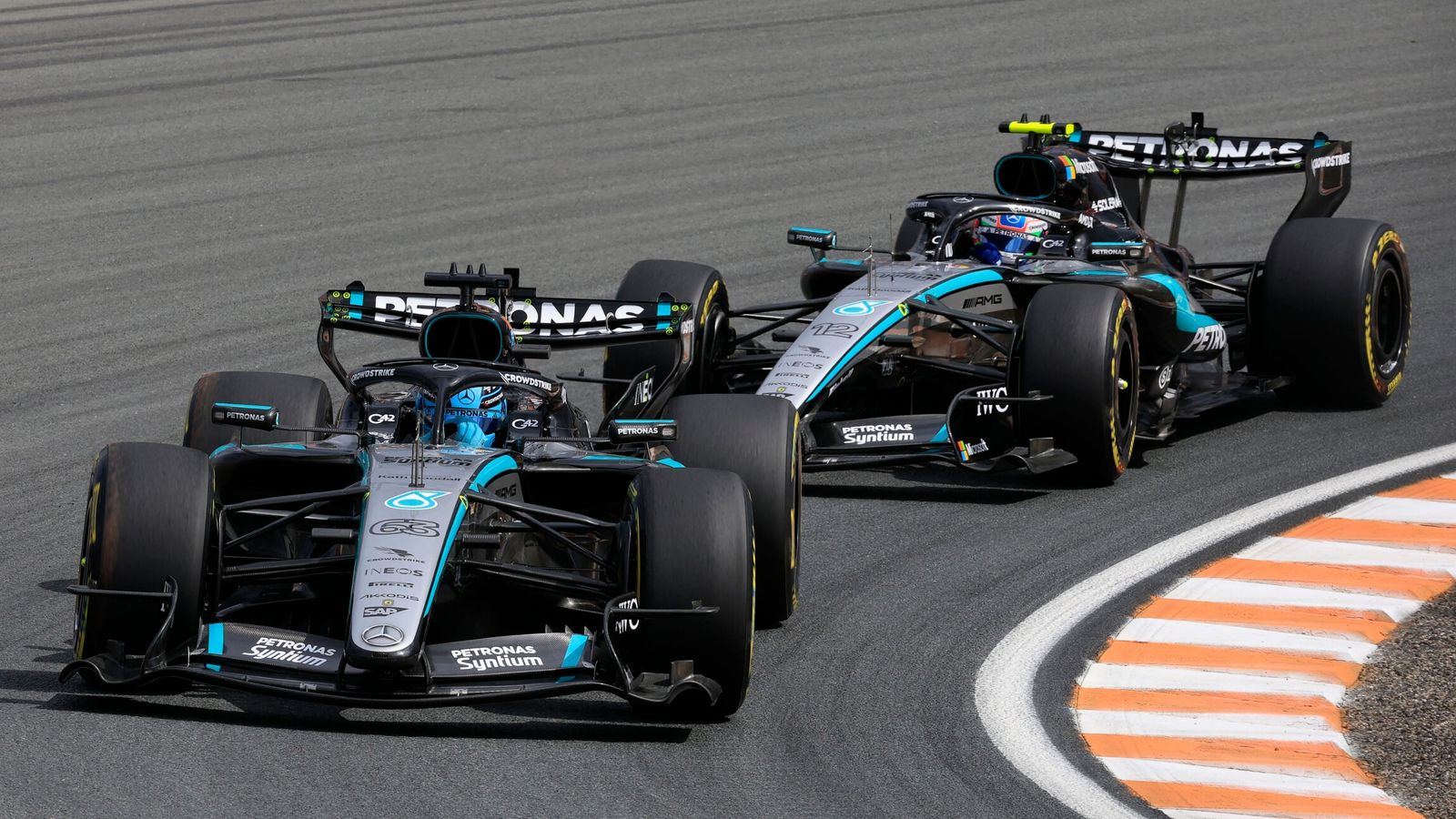
Mercedes' Strategic Trade-Off in the 2026 Championship Fight
Mercedes' aggressive early-season development path has established a substantial championship buffer, but team boss Toto Wolff’s admission that the squad lacks the financial leeway to match rivals' update cycles reveals the structural limits of their campaign. Speaking on Sky Sports' The F1 Show, former Aston Martin head of strategy Bernie Collins noted that the Silver Arrows' front-loaded approach leaves them vulnerable to closing margins as Ferrari and McLaren introduce steady aerodynamic iterations.
Mercedes opened the 2026 regulation cycle by securing six consecutive victories—one for George Russell followed by five straight for Kimi Antonelli. However, the subsequent six rounds yielded only two Mercedes wins, while Ferrari and McLaren took two apiece. Successive victories by McLaren's Lando Norris across Hungary and the Netherlands demonstrated how rapidly the aerodynamic load paths of rival packages have closed the gap.
The pit-lane entry line at modern circuits leaves zero margin for tire scrub, yet the real arithmetic is unfolding in wind tunnels.
Championship Standings and Upgrade Timelines
Despite the deceleration in win conversion, Mercedes maintain control of both tables based on points collected during the opening phase:
- Drivers' Championship: Kimi Antonelli leads with a 59-point margin over both George Russell and Ferrari's Lewis Hamilton, while Lando Norris sits fourth, 83 points adrift.
- Constructors' Championship: Mercedes hold an 87-point advantage over Ferrari, with McLaren trailing by 162 points.
While McLaren and Ferrari have bolted continuous floor and wing revisions onto their chassis, Mercedes' next major package—their first since the Canadian Grand Prix in May—is scheduled for the relocated Bahrain Grand Prix in Malaysia on October 2-4. That leaves three intervening rounds at Monza, Spain, and Azerbaijan where the W17 chassis must defend its baseline performance without structural alterations.
"Mercedes have sort of put their money on the front end. There are pros and cons to that," Collins explained. "Getting the points on the board early when other people are struggling is the pro, but conversely, then you're not gathering the data and learning about the development for the next six months when other people are."
Calendar Volatility and Aero Tuning Constraints
The operational calculus is further distorted by late revisions to the racing calendar. The rescheduling of the Bahrain round to Malaysia following geopolitical disruptions, alongside the cancellation of the Saudi Arabian Grand Prix and uncertainty surrounding the final fixtures in Qatar and Abu Dhabi, forces aerodynamicists into compromised setups.
Because teams design downforce profiles tailored to specific circuit envelopes—balancing negative pressure across high-speed sweeps against mechanical grip in low-speed complexes—calendar fluidities make it difficult to allocate remaining budget cap allowances efficiently.
Formula 1 resumes at the Italian Grand Prix at Monza on September 4-6, where low-drag requirements will provide a precise reading on whether Mercedes' existing power unit and chassis architecture can withstand Ferrari's home assault without immediate floor updates.