Reporting note: this article draws on Sky Sports; TaxiSports provides the summary and editorial framing.
The Mathematics of Development Under the 2026 Cap
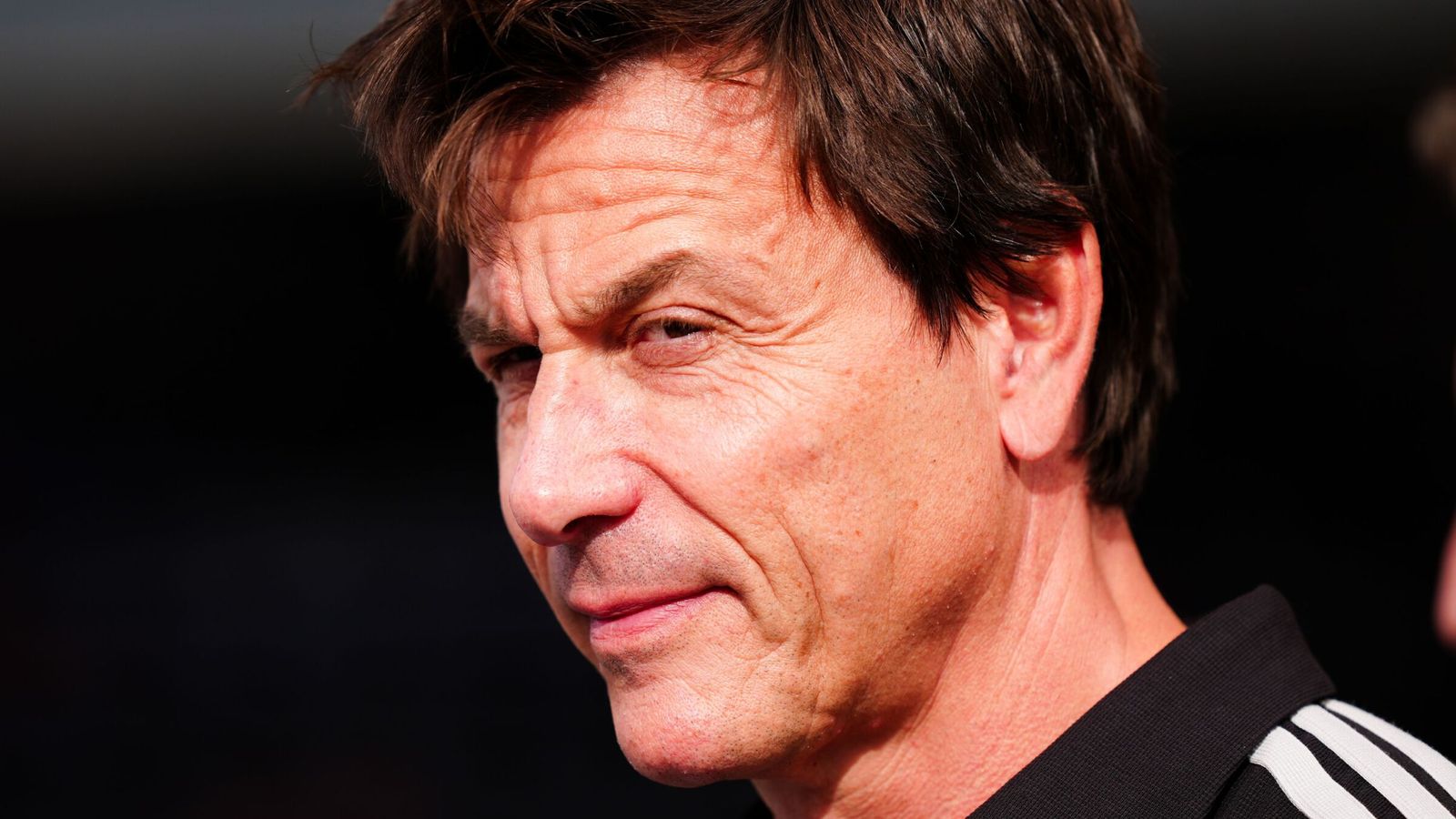
Mercedes are managing an asymmetric development phase in the 2026 Formula 1 season. Following the Dutch Grand Prix, team principal Toto Wolff indicated that the championship leaders lack the immediate financial headroom under the $215m cost cap to accelerate aerodynamic revisions against McLaren and Ferrari.
The structural advantage Mercedes established across the opening six rounds—winning each event under the current regulations cycle—has receded. Over the subsequent six rounds, victory distribution has equalized into a tripartite split: two wins apiece for Mercedes, Ferrari, and McLaren. Lando Norris converted successive updates at Budapest and Zandvoort into back-to-back victories, whereas the Mercedes W17 has not received a primary aerodynamic overhaul since late May in Montreal.
Wolff outlined the financial allocation model governing Brackley’s program, stating that updates cannot simply be brought forward to counter rival increments.
“We haven’t got the money to put developments on the car. We are trying to evenly split that through the season based on our calculations of when we can bring the biggest updates and optimising the championship points. If you bring an update, each of the top teams will have a couple of tenths in it, at least, and that’s what we lose.”
The pit-lane exit line offers no forgiveness for delayed aero load paths when an opponent finds two-tenths in floor efficiency.
Championship Standings and Strategic Reserves
Despite the development deficit, Mercedes extended their advantage in both championship standings over the Zandvoort weekend. Kimi Antonelli secured second place to widen his drivers' standings lead to 59 points over teammate George Russell and Ferrari's Lewis Hamilton, with Russell completing the podium in third.
However, the performance delta on track has shifted. Antonelli noted that Mercedes are no longer operating the benchmark aerodynamic package, ranking the W17 second or third in outright race trim behind McLaren’s upgraded floor and diffuser geometry.
The Paddock Counter-Argument
McLaren team principal Andrea Stella disputed Wolff’s assertion that Mercedes are financially immobilized, highlighting the reporting mechanisms built into the financial regulations:
- 2027 Power-Unit Allowance: Regulations allow teams an estimated $3m reporting adjustment for 2026 calculations related to future powertrain changes.
- Wind Tunnel Correlation: Stella suggested Mercedes maintain unreleased aerodynamic potential from scale-model testing ready for track deployment.
- Staggered Expenditure: Wolff posited that McLaren and Ferrari may have front-loaded capital allocations, potentially leaving them vulnerable to resource exhaustion in the final quarter of the season.
Next Fixture: Monza Structural Balance
The championship transitions directly to the Autodromo Nazionale Monza for the Italian Grand Prix on September 4-6. The high-speed straight-line demands and heavy braking zones of Monza represent a stark mechanical contrast to the prolonged lateral loads and chemical decay of tires experienced at the Hungaroring and Zandvoort.
While Russell acknowledged McLaren as the current standard, the low-drag efficiency required at Monza will test whether Mercedes' baseline car architecture can offset their rivals' aggressive upgrade cycle before their next planned package arrives.