Reporting note: this article draws on Sky Sports; TaxiSports provides the summary and editorial framing.
Why Reliability Can Decide the Championship
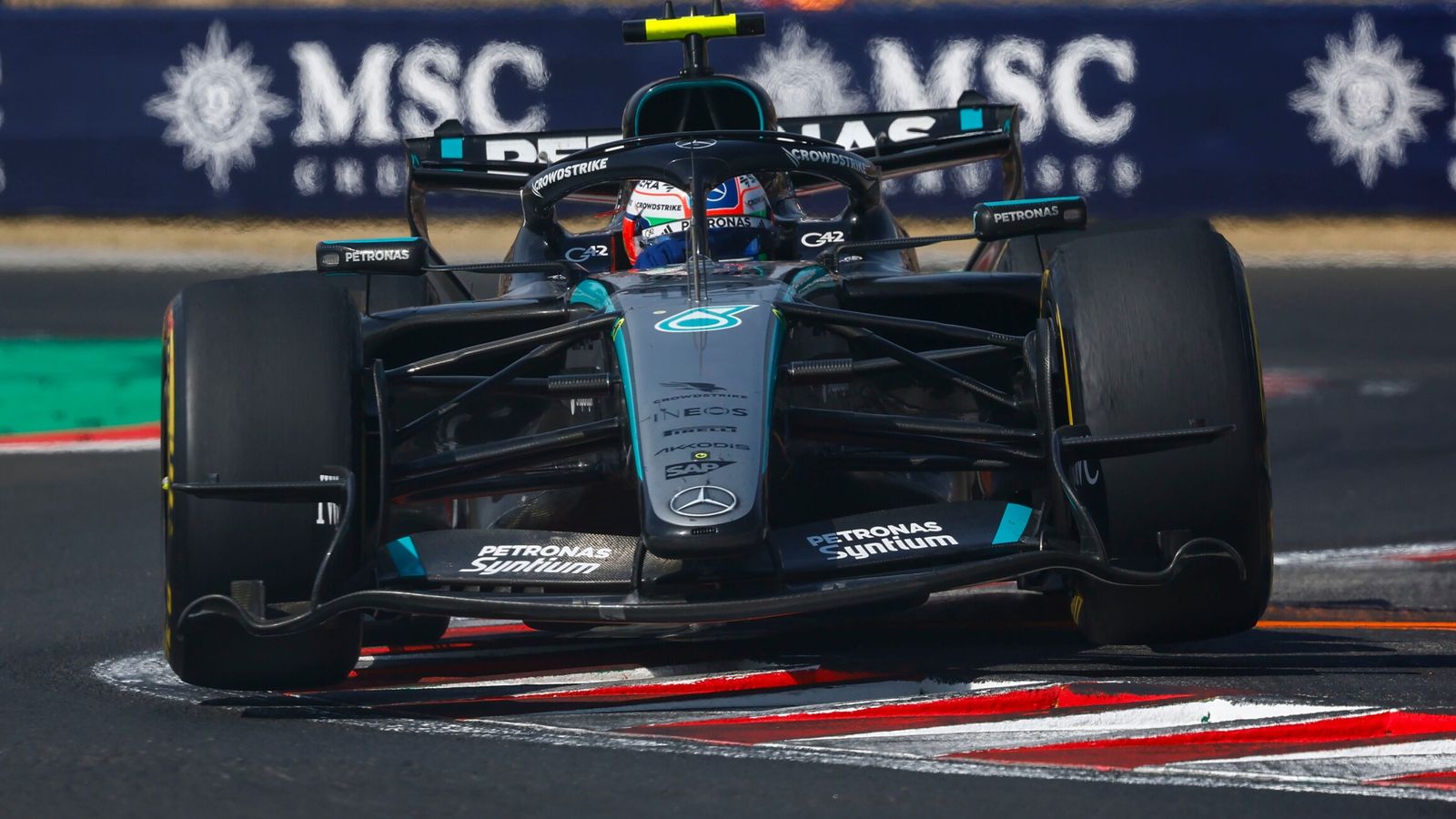
Mercedes' advantage is substantial but fragile. Technical director James Allison's point is that a race-ending failure can erase the benefit of several incremental upgrades in one afternoon, making clean execution and dependable hardware the team's highest-value development targets for the final 12 rounds.
The structural vulnerability is evident in the telemetry of recent results. Despite topping both tables, Mercedes has secured a dual top-six finish with Antonelli and George Russell in only one of the previous seven grands prix. For Allison, the calculation is purely arithmetic: an effective floor or wing upgrade yields perhaps 10 to 20 points across an entire season, whereas a single mechanical retirement deducts up to 25 points from the ledger in a single afternoon.
Allison underscored that eliminating operational errors and power unit failures on the W17 chassis outweighs the chasing of marginal downforce increments as the calendar pivots toward the Dutch Grand Prix.
“A single retirement can cost you that amount in one afternoon. So while we’re committed to continuing development, our biggest focus going into the second half of the season is reducing the self-inflicted wounds that have cost us points in the opening races,” Allison stated.
The pit-lane entry at Zandvoort remains compressed by several crucial meters, leaving zero margin for compromised transit times during unscheduled mechanical resets.
Development Curves and Phasing Disparities
The aerodynamic trajectory of the 2026 regulation cycle has yielded wind-tunnel gains six to seven times higher than the previous ruleset. Mercedes opted to front-load its technical budget, exhausting its baseline performance curve prior to round one without built-in scheduling contingencies. While this created an early-season performance envelope, it left the team temporarily out of phase as Ferrari, McLaren, and Red Bull delivered mid-season development packages.
Team principal Toto Wolff acknowledged that rivals have closed the aerodynamic gap, noting that execution over the remaining 12 rounds will decide the championship as Mercedes introduces its second development wave.
Zandvoort Historical Vulnerability
The Dutch Grand Prix presents an immediate structural test. The abrasive seaside asphalt acts as an unforgiving surface for chemical decay on tire compounds, and Mercedes has historically struggled across the banked geometry of the circuit. The team has failed to score a podium at Zandvoort since 2021 and has seen at least one car eliminated prior to Q3 in each of the past three visits.
With the circuit departing the Formula 1 schedule after this event, the weekend serves as both a final opportunity to resolve their Zandvoort deficit and a critical test of mechanical resilience under high lateral loads.