Reporting note: this article draws on Sky Sports; TaxiSports provides the summary and editorial framing.
The 60-Minute Calibration Trap
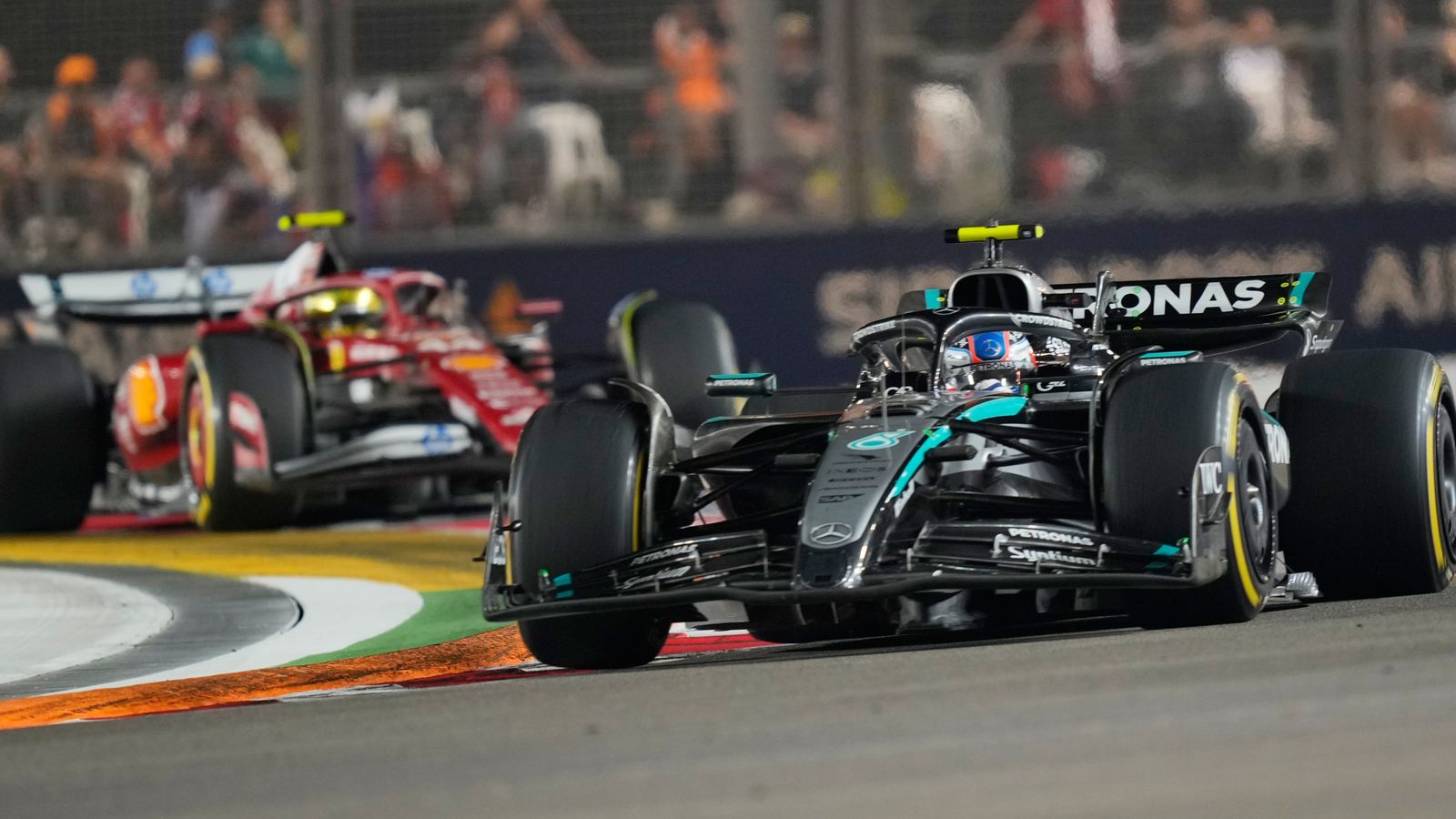
Formula 1 concludes its late-season flyaway triple header at the Marina Bay Street Circuit with a structural anomaly: embedding a Sprint format into a 19-corner, low-average-speed street layout. Marina Bay's 62-lap Grand Prix historically pushes the physical two-hour threshold. Introducing a standalone 100km Saturday race and two qualifying sessions strips away two-thirds of traditional practice time, leaving teams exactly 60 minutes of free practice to define their mechanical and aerodynamic baselines.
The engineering complication lies in thermal asymmetry. The sole practice session takes place at 16:30 local time in late daylight, whereas Friday's Sprint Qualifying runs at 20:30 under artificial floodlights as track temperatures drop. Because parc fermé regulations lock mechanical ride heights, spring rates, and downforce profiles prior to Friday night running, engineers must guess the evening window from unrepresentative afternoon data. On an unforgiving street surface, misjudging the chemical decay of the tire compound or floor-edge clearance over the curbs by even two millimeters risks significant lap-time deficits across the lap's repeated 90-degree braking zones.
Precursor to Monaco and Qualifying Jeopardy
The decision to run a Sprint at Marina Bay serves as the direct operational precedent for 2027, when the Sprint calendar expands to 10 events including the Circuit de Monaco. Conventional wisdom previously restricted 100km races to high-overtaking venues like Silverstone and Interlagos. On street circuits where aerodynamic turbulence and narrow track widths minimize overtaking, the competitive emphasis shifts entirely to single-lap execution.
With two distinct qualifying sessions—Sprint Qualifying on Friday and Grand Prix Qualifying on Saturday—the margin for error against the retaining walls is halved. A 0.050-second hesitation at the apex of Turn 7 or an over-rotated entry into Turn 14 creates insurmountable starting deficits on a circuit where track position dictates race strategy.
The Four-Way Front-Running Dynamic
Despite the operational constraints, the competitive balance at the front involves four distinct chassis philosophies following Red Bull's recent victory in Malaysia:
- Mercedes: Championship leader Kimi Antonelli carries the team's primary hopes after showing supreme low-speed control in Monaco earlier this year. The team continues to assess whether its floor upgrade from Malaysia yields intended downforce load paths. George Russell faces a Sunday back-of-the-grid start due to an engine penalty incurred from his Bahrain power unit failure, though his grid penalty will not affect Saturday's Sprint.
- Red Bull: Max Verstappen enters his 10th attempt to capture an elusive first victory at Marina Bay. After qualifying and finishing second in the previous two editions, Red Bull will rely on recent balance improvements to tackle Singapore's slow-speed traction demands.
- McLaren: Having excelled at high-downforce venues like the Hungaroring and Zandvoort, McLaren aims to recover from straight-line and balance limitations experienced in Baku and Sepang.
- Ferrari: Lewis Hamilton and Charles Leclerc enter the weekend favored by the absence of extended straights, relying on the Ferrari chassis' mechanical compliance across Singapore's bumpy braking transitions.