Reporting note: this article draws on Sky Sports; TaxiSports provides the summary and editorial framing.
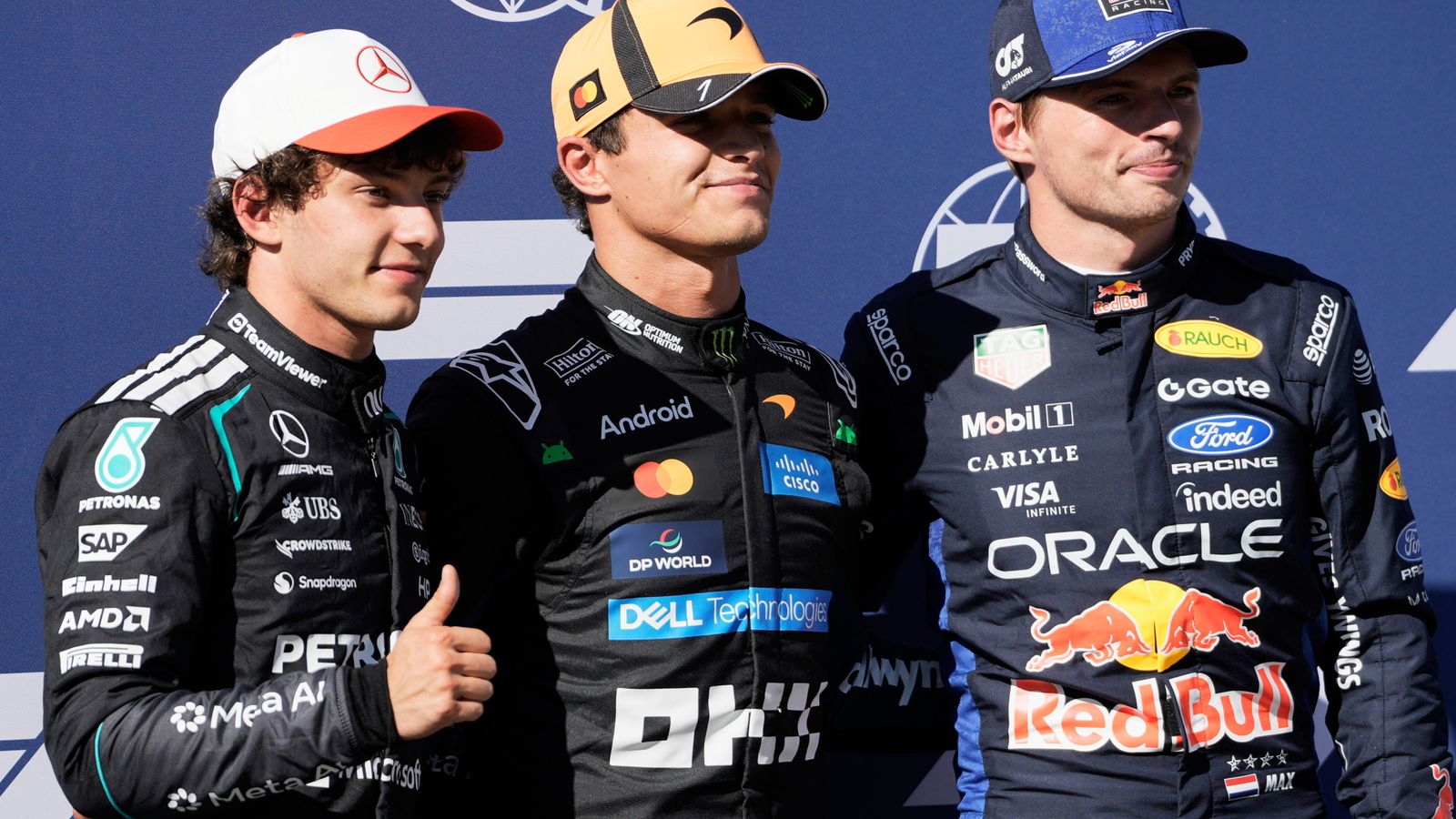
Uncertainty Governs the 57-Lap Madring Inauguration
The inaugural Spanish Grand Prix at the wall-lined Madring circuit presents a stark operational variable for Formula 1 teams: high chemical decay of tire compounds versus limited overtaking geometry. Following qualifying margins separated by mere thousandths of a second—where McLaren’s Lando Norris secured pole position by 0.011 seconds over Mercedes’ championship leader Kimi Antonelli—the competitive order shifts to race management across 57 laps.
Friday practice runs revealed severe graining across heavier-fuel simulations, driven primarily by sustained lateral loads through sweeping sections and the banked 'La Monumental' Turn 12. Mercedes driver George Russell, starting sixth, framed the outcome around these thermal thresholds: the event will settle into either a low-wear procession or high-decay tactical volatility.
Norris Faces Data Deficit at the Front
While track position offers clean air and thermal relief for the floor edges and front wing profiles, Norris enters Sunday with an asymmetrical data profile. A gearbox failure during Friday's second practice session restricted the McLaren driver from completing baseline high-fuel long runs.
Norris must rely on telemetry from teammate Oscar Piastri and onboard references to calibrate his management targets. Starting ahead of Antonelli, Max Verstappen (Red Bull), and Lewis Hamilton (Ferrari), the initial phase requires managing surface temperatures without dropping into the wake-vulnerable window of the chasing pack.
Ferrari's Hamilton, who starts fourth, noted that initial expectations of benign tire behavior were contradicted by Friday's steep graining patterns, leaving teams without verified operating baselines.
Geometry and Strategy Constraints
The Madring circuit's configuration imposes tight tolerances on overtaking, concentrating pressure on strategic execution and undercuts:
- Braking Zones: Verstappen criticized the approach to the Turn 5 chicane, noting that braking zones requiring concurrent steering input structurally suppress conventional overtaking maneuvers.
- Pace Delta: Antonelli highlighted that identical long-run pace among front-runners will limit passing opportunities on track, shifting the fight toward forcing tire stress on leading cars or exploiting strategy offsets.
- Stop Calculations: Sky Sports F1 analyst Bernie Collins noted that a one-stop strategy requires significant pace management to suppress graining through Turn 12. However, if overtaking proves viable, cars managing tires at low speeds risk being vulnerable to aggressive two-stop undercut strategies.
McLaren team principal Andrea Stella confirmed widespread graining across all run plans, signaling that adaptable strategy models will dictate track position across Sunday's 57-lap distance.