Reporting note: this article draws on Sky Sports; TaxiSports provides the summary and editorial framing.
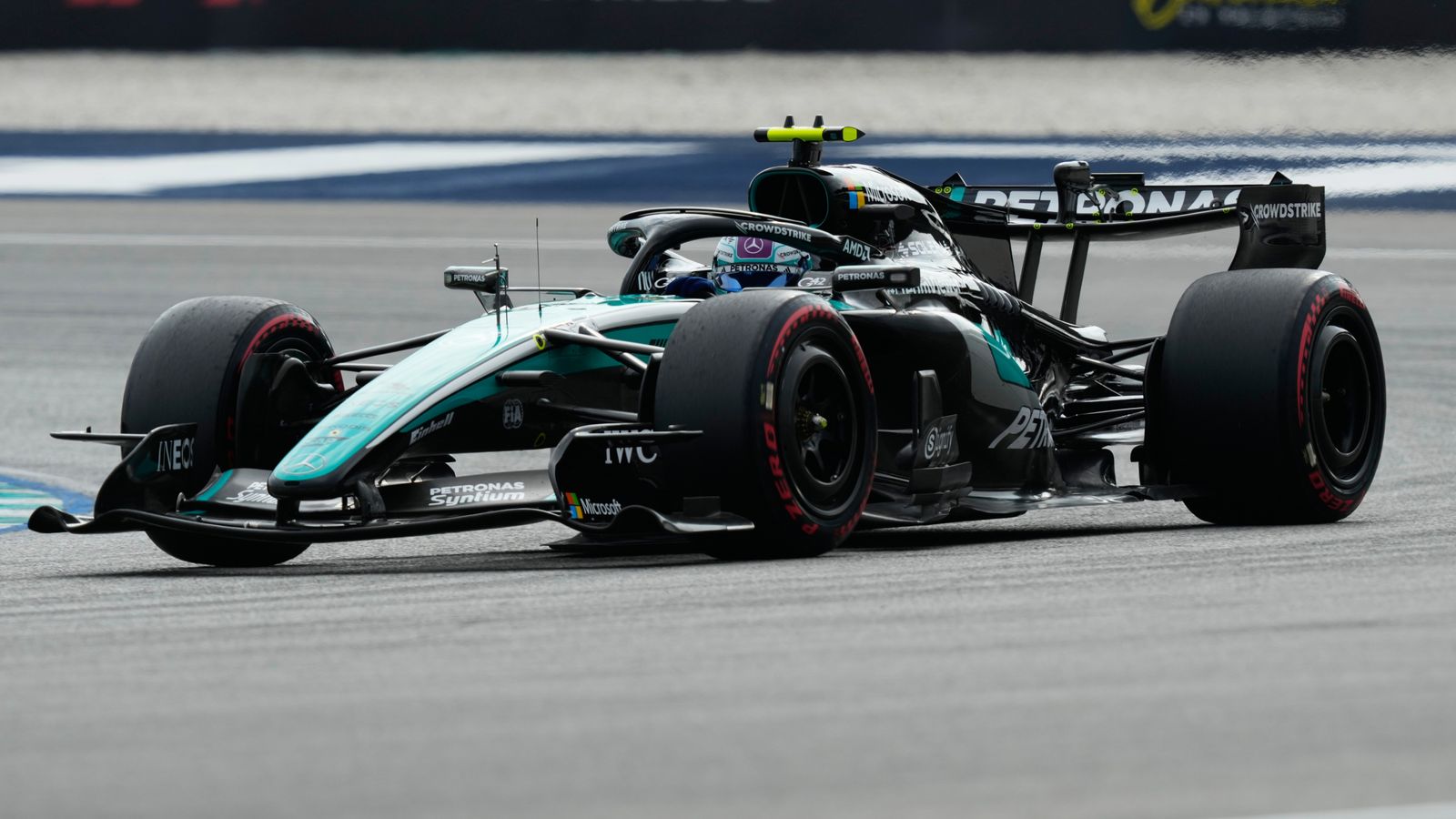
Antonelli Sets the Benchmark in Sepang
Championship leader Kimi Antonelli led the timing sheets in final practice for the Bahrain Grand Prix in Malaysia, edging Red Bull's Max Verstappen by 0.278 seconds at the Sepang International Circuit. Antonelli, who holds a 66-point lead in the Drivers' Championship over Mercedes team-mate George Russell, rebounded from a difficult Friday setup to establish a sharp, rhythm-heavy benchmark heading into qualifying.
Verstappen slotted into second, positioning Red Bull as the primary challenger to Mercedes. Isack Hadjar backed up Red Bull's pace in third, while Russell finished fourth. Both Hadjar and Russell ended the session more than half a second adrift of Antonelli's leading time as teams dialed in their high-speed stability across Sepang’s demanding sweepers.
Surface Friction and Thermal Demands
The return to Sepang for the first time since 2017 has presented severe technical demands on tire longevity and chassis behavior. High ambient temperatures combined with extreme humidity quickly tore into the soft compound slick treads, leaving the rubber visibly scarred with micro-graining and blistering along the loaded outer shoulders after short runs.
The circuit's high lateral loads put structural floor aerodynamics under heavy strain. Under intense downforce compression through Turns 5 and 6, cars relied on stiff floor skins and rigid roll bars to prevent bottoming out against the coarse, abrasive asphalt.
Ferrari, McLaren, and Midfield Stumbles
Ferrari showed flashes of competitive one-lap pace but fell short of the top three. Charles Leclerc, who paced Friday's second practice, finished fifth—seven-tenths off the top mark—while Lewis Hamilton finished sixth despite reporting improved mechanical balance through the final sector.
McLaren kept their outright pace hidden, with Lando Norris and Oscar Piastri taking seventh and eighth. Norris posted his personal best on the medium compound tires, indicating that McLaren held performance in reserve. Alpine's Franco Colapinto managed ninth place despite facing a combined 15-place grid penalty resulting from an engine change and an incident last round in Baku. Racing Bulls rookie Arvid Lindblad completed the top 10.
The session was briefly interrupted by a red flag when debris lodged onto Oliver Bearman’s Haas at Turn 10, requiring marshals to clear carbon remnants from the racing line.
Weekend Outlook
With tire degradation acting as the dominant strategic variable across Sepang's abrasive surface, tire management over extended stints will dictate both qualifying execution and Sunday's grand prix pit stop strategies.

Quinn Santos
Quinn Santos covers Formula 1 with a reverent, forensic attention to the physical and acoustic life of the race. In reports, engine notes are not background noise but specific orchestral intervals moving through the grid, and every race devotes space to the degraded texture of tire compounds after a stint, read like worn material rather than performance data. Chassis geometry and floor aerodynamics are explained through architectural metaphor: load paths become load-bearing walls, floors become tensioned skins. Quinn avoids standard telemetry charts, instead reconstructing key overtakes through rhythmic, beat-heavy sentence structures that carry braking points and exits like percussion. A reader gets the feeling of the circuit as a built and sounding environment, not a sequence of lap times. Each race recap closes with an unprompted weather report comparing trackside humidity to the driver's sweat output, a small forensic reminder of how much the body and the air are part of the result.