Reporting note: this article draws on Sky Sports; TaxiSports provides the summary and editorial framing.
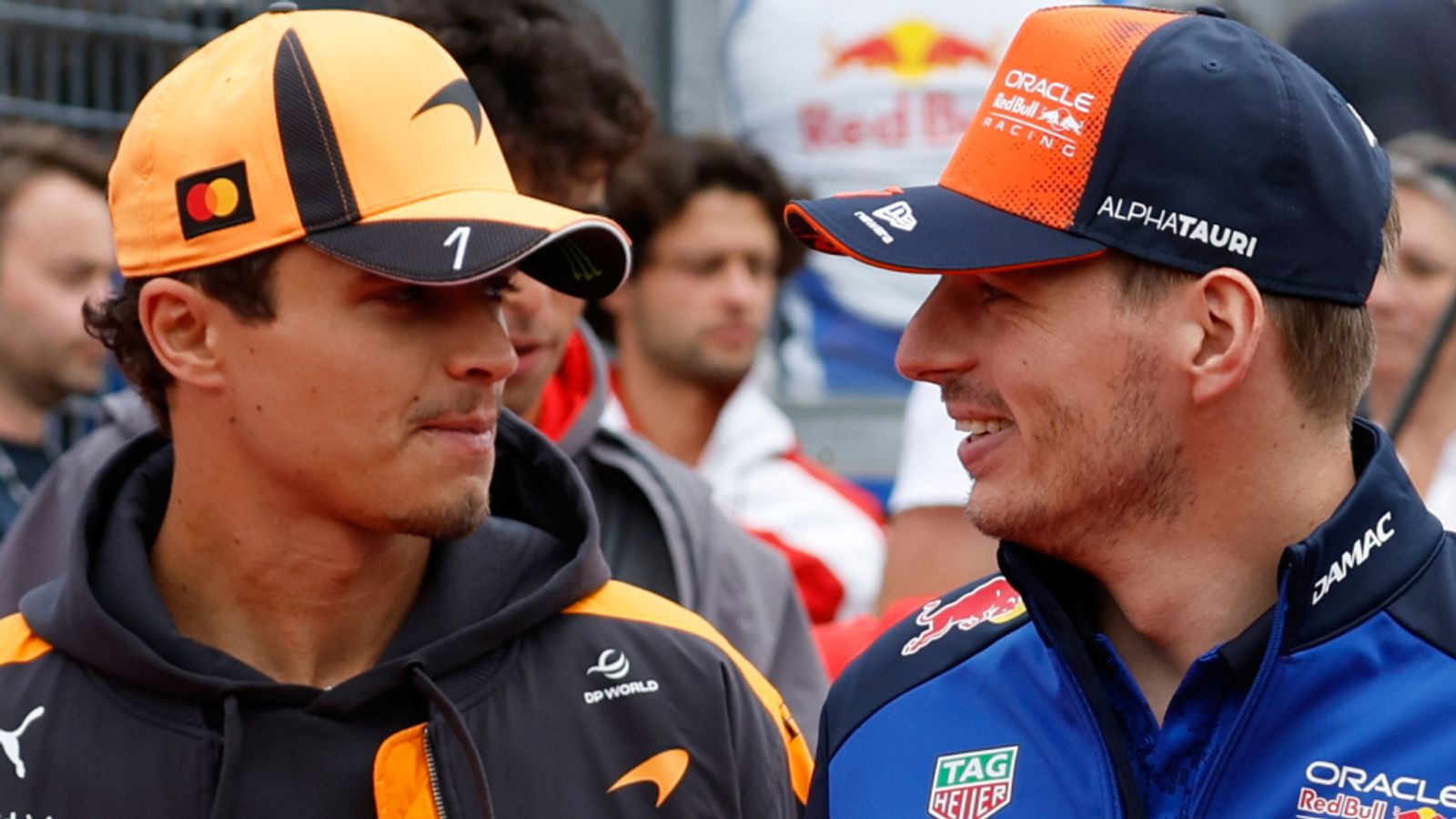
Top Seats Locked Down Through 2030
Long-term contract extensions for four-time world champion Max Verstappen and reigning world champion Lando Norris have formally anchored the sharp end of the Formula 1 grid through 2030. Verstappen committed his future to Red Bull despite lingering links to Mercedes and McLaren, while Norris solidified his tenure as McLaren's lead pillar with a fresh multi-year agreement.
With Mercedes committed to championship leader Kimi Antonelli alongside George Russell, and Ferrari retaining Charles Leclerc and Lewis Hamilton, the sport's established top four outfits appear stable on paper. Yet underneath the contract security, competitive tensions and emerging performance gaps threaten to disrupt the grid's balance over the next 18 months.
Teammate Dynamics at Mercedes and McLaren
Neither Mercedes nor McLaren operates with a declared number-one driver hierarchy, but intra-team results are shifting leverage. Norris bested Oscar Piastri to secure last year's drivers' title and has found an earlier mechanical rhythm with the 2026 chassis regulations. Meanwhile, Russell has faced stiff pressure from Antonelli, whose rapid development since turning 20 has kept him atop the standings.
If Piastri or Russell endure persistent deficits into the 2027 campaign, the pressure to seek an outright lead role elsewhere will intensify. For drivers pursuing a maiden world championship, shifting allegiances remains the primary escape route from an entrenched intra-team imbalance.
Ferrari Succession and Red Bull's Pace Deficit
Hamilton remains committed to Ferrari, holding an option that could extend his stay through the conclusion of 2028, when he will turn 44. While Fernando Alonso has demonstrated longevity into his mid-40s, an opening at Maranello for 2029—or sooner—remains a distinct possibility. Ferrari junior Oliver Bearman, currently gaining experience on loan at Haas, represents an internal option, though any vacancy in Italian red inevitably draws interest from across the paddock.
At Milton Keynes, Red Bull faces its own structural hurdles. The team currently trails Mercedes, Ferrari, and McLaren in outright performance. While Verstappen is tied down until 2030, unresolved questions regarding exit clauses mean Red Bull must deliver a competitive package for 2027. Failure to close the gap on corner exits and high-speed load paths could reignite talks between Verstappen and rival frontrunners.
The Aston Martin Variable
Any disruption to the top four hinges on external challengers bridging the performance divide. Aston Martin entered the 2026 technical reset with high ambitions under team principal Adrian Newey, but power unit deficits with partner Honda have left them trailing the leaders. Should Honda resolve its reliability and deployment issues, Newey's aero platform could transform Aston Martin into a viable alternative destination for top-tier talent seeking a championship-calibre floor.
The paddock now heads directly to Monza for the Italian Grand Prix on September 4–6, where ambient trackside humidity is projected at 58 percent against an estimated driver fluid loss of nearly 2.4 kilograms over 53 laps.

Quinn Santos
Quinn Santos covers Formula 1 with a reverent, forensic attention to the physical and acoustic life of the race. In reports, engine notes are not background noise but specific orchestral intervals moving through the grid, and every race devotes space to the degraded texture of tire compounds after a stint, read like worn material rather than performance data. Chassis geometry and floor aerodynamics are explained through architectural metaphor: load paths become load-bearing walls, floors become tensioned skins. Quinn avoids standard telemetry charts, instead reconstructing key overtakes through rhythmic, beat-heavy sentence structures that carry braking points and exits like percussion. A reader gets the feeling of the circuit as a built and sounding environment, not a sequence of lap times. Each race recap closes with an unprompted weather report comparing trackside humidity to the driver's sweat output, a small forensic reminder of how much the body and the air are part of the result.