Reporting note: this article draws on Sky Sports; TaxiSports provides the summary and editorial framing.
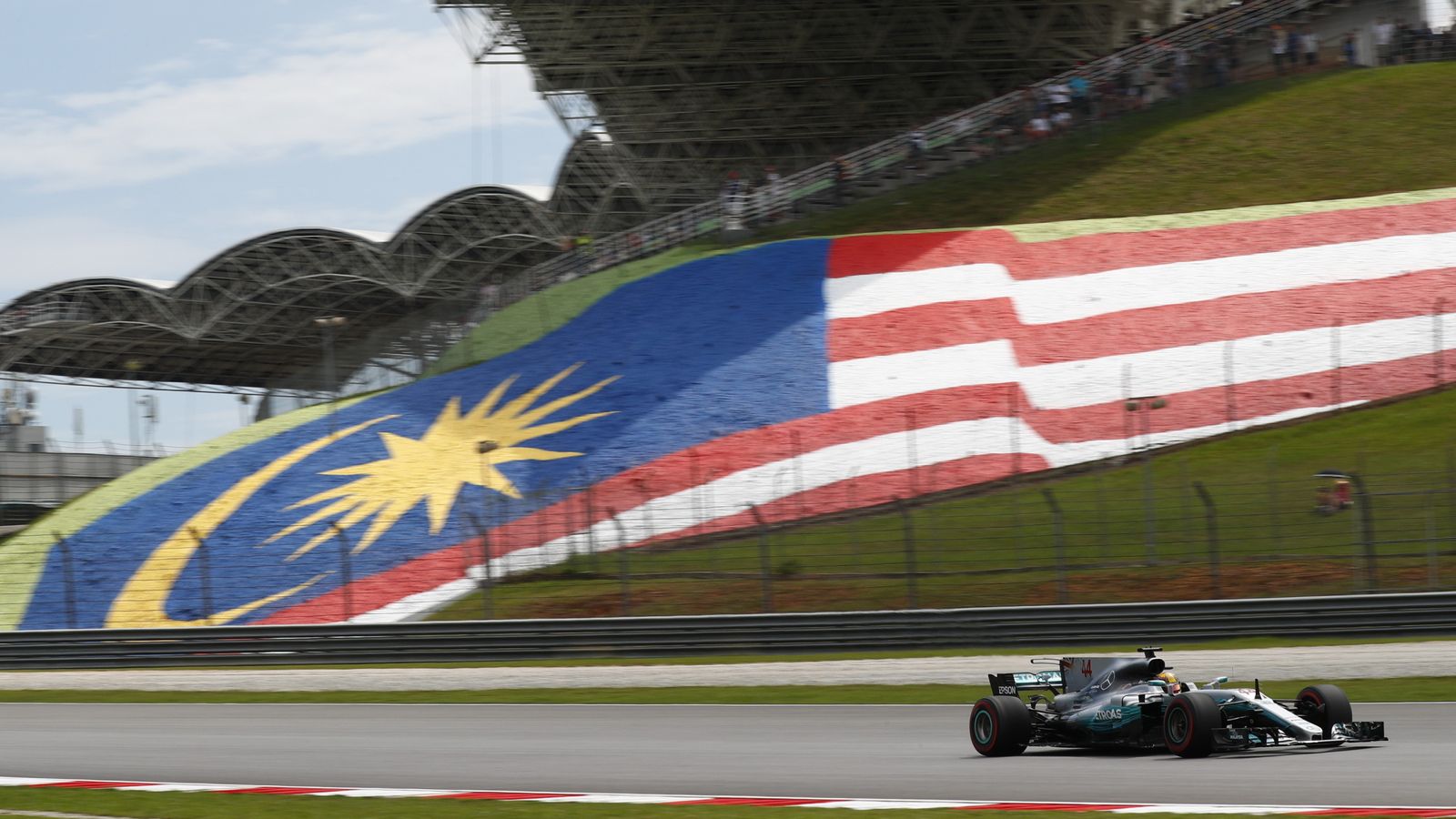
Sepang Returns to F1 Calendar as Stand-In for Bahrain Grand Prix
After a nine-year absence from the Formula 1 schedule, Malaysia's Sepang International Circuit returns to host the 2026 Bahrain Grand Prix. The event was relocated following disruptions that prevented Bahrain from staging its scheduled April round at the Bahrain International Circuit in Sakhir due to conflict in the Middle East. Sepang last hosted a Grand Prix in 2017, won by Red Bull's Max Verstappen.
The event marks the second leg of a flyaway triple-header, arriving immediately after the Azerbaijan Grand Prix in Baku, where Mercedes driver George Russell secured victory by less than two tenths of a second over Verstappen. In the Drivers' Championship standings, rookie Kimi Antonelli holds the lead with a 66-point margin over the field with eight rounds remaining, following a fifth-place recovery drive in Baku. Lewis Hamilton sits 103 points behind Antonelli, while Lando Norris trails by 116 points as McLaren looks to leverage Sepang's high-speed profile.
Sepang Circuit Layout: Aero Load and Structural Demands
Designed by circuit architect Hermann Tilke and opened in 1999, the 3.44-mile, 15-corner Sepang layout remains a critical benchmark for aerodynamic efficiency and chassis balance. The circuit tests a car's aerodynamic platform across wide speed ranges, demanding high downforce through sweeping direction changes without excessive drag along its parallel straights.
Key sectors across the lap include:
- Turns 3 and 4: A sustained lateral loading sequence through the right-hand Turn 3 leading directly into the heavy braking zone of the Turn 4 right-hander.
- Turns 5 and 6: Rapid, high-speed directional transitions that require immediate front-axle bite and floor stability.
- Final Sector Hairpin: A technical sequence exiting onto a half-mile back straight, concluding at the wide Turn 15 hairpin that creates prime overtaking opportunities under braking.
Tropical conditions remain a primary strategic variable at Sepang. High ambient heat, heavy humidity, and rapid afternoon thunderstorm cycles present constant challenges for cooling systems and wet-weather operational calls.
2026 Bahrain GP at Sepang: UK Session Times and Schedule
With Malaysia operating seven hours ahead of the UK, live coverage of the race weekend will air during morning hours on Sky Sports F1 and NOW streaming services.
Full UK Broadcast Schedule
- Friday, October 2: Practice 1 at 5:30am; Practice 2 at 9:00am.
- Saturday, October 3: Practice 3 at 5:30am; Qualifying at 9:00am.
- Sunday, October 4: Bahrain Grand Prix at 8:00am.

Quinn Santos
Quinn Santos covers Formula 1 with a reverent, forensic attention to the physical and acoustic life of the race. In reports, engine notes are not background noise but specific orchestral intervals moving through the grid, and every race devotes space to the degraded texture of tire compounds after a stint, read like worn material rather than performance data. Chassis geometry and floor aerodynamics are explained through architectural metaphor: load paths become load-bearing walls, floors become tensioned skins. Quinn avoids standard telemetry charts, instead reconstructing key overtakes through rhythmic, beat-heavy sentence structures that carry braking points and exits like percussion. A reader gets the feeling of the circuit as a built and sounding environment, not a sequence of lap times. Each race recap closes with an unprompted weather report comparing trackside humidity to the driver's sweat output, a small forensic reminder of how much the body and the air are part of the result.